
 en
en
 es
es


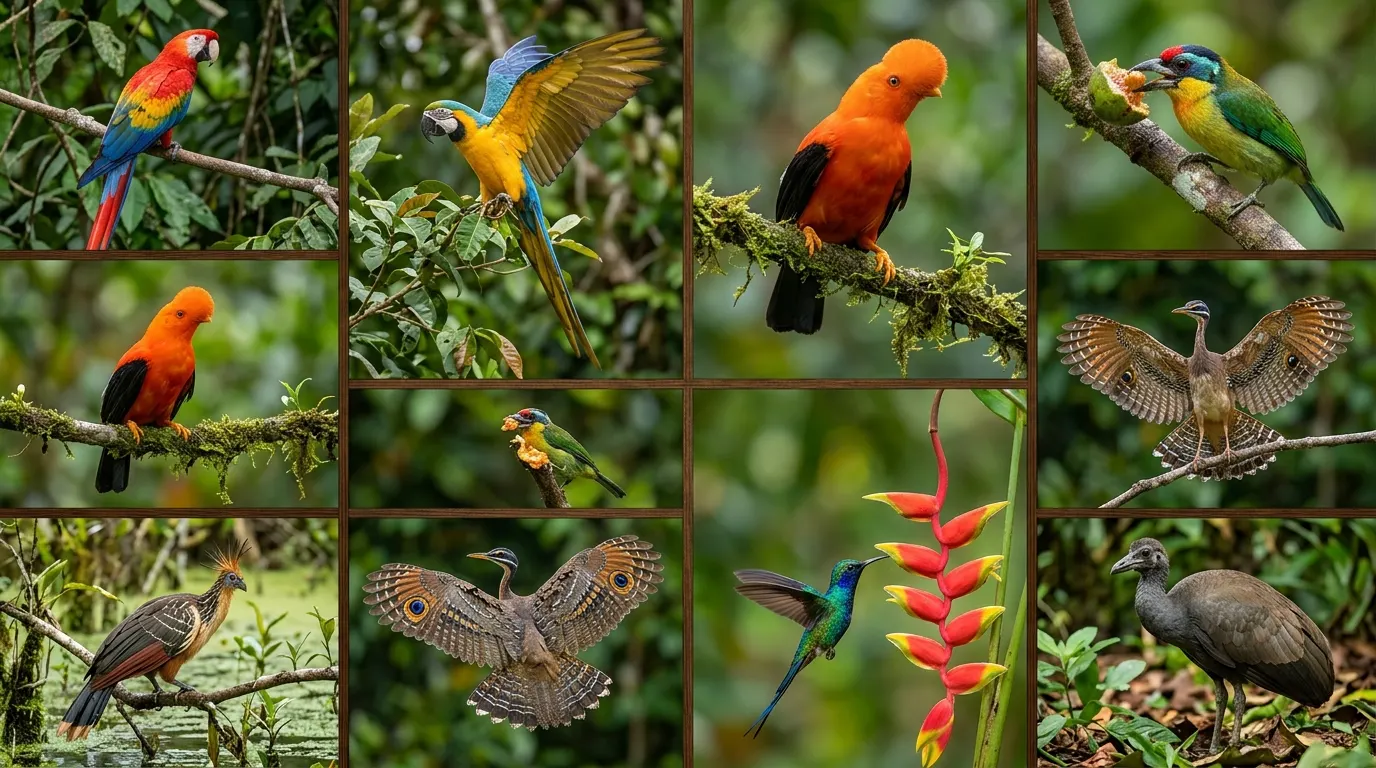
The Peruvian Amazon harbors one of the largest concentrations of wildlife on the planet. As a biologist, observing the behavior of the birds of the peruvian jungle in their natural habitat is a constant exercise in patience and scientific rigor. These species fulfill fundamental ecological roles, from seed dispersal to the population control of insects and small mammals. This technical report details the biology, taxonomy, and conservation status of the main birds of peru amazon, offering exact data on their ecology.
Representative Birds of the Jungle and Their Names
To truly understand this ecosystem, the first taxonomic step is identifying the various birds of the jungle by their scientific and common names. An exhaustive list would require several volumes, so this record focuses on the most emblematic species, including those historically recognized as national symbols due to their high biological and cultural value.
Andean Cock-of-the-rock: The National Bird
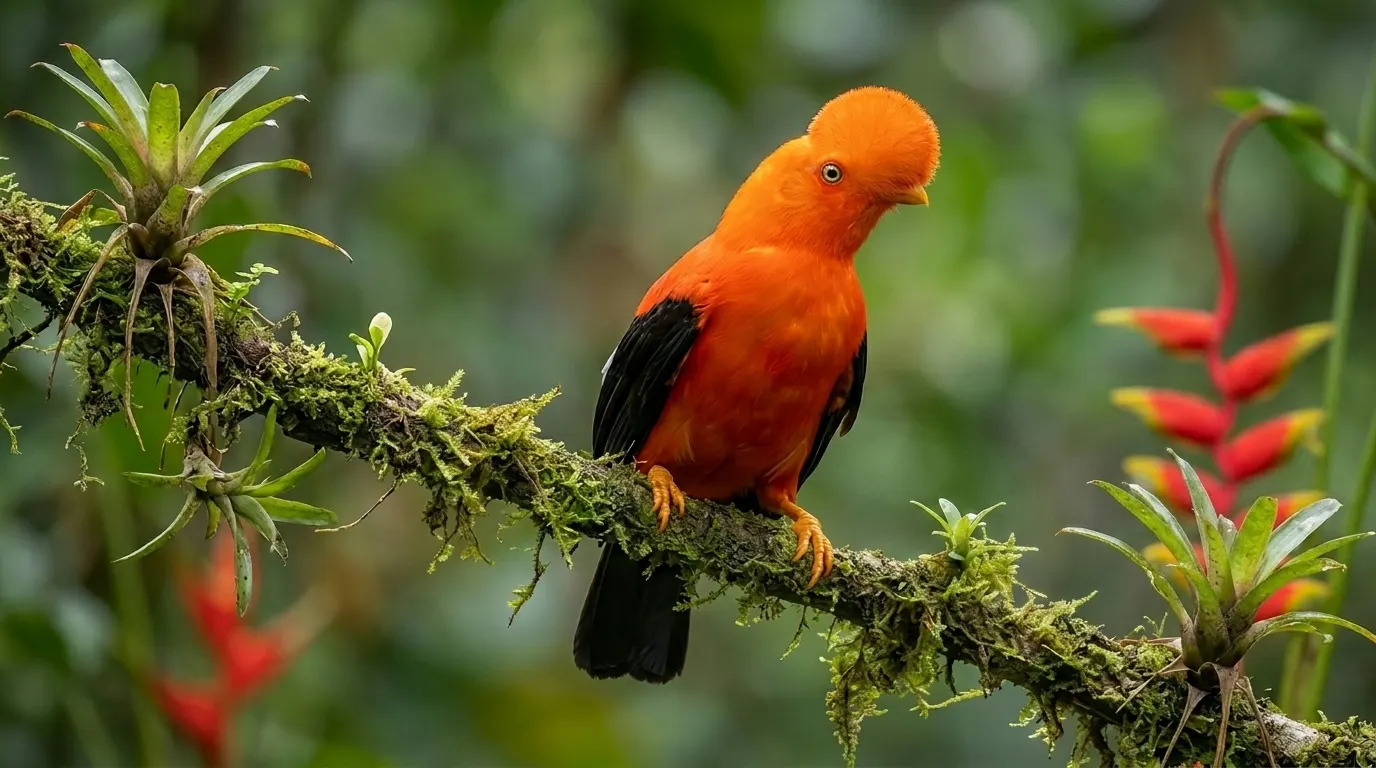
The Rupicola peruvianus is the representative bird of the Peruvian Amazon. It mainly inhabits the steep cloud forests, being one of the most studied species in the high jungle due to its complex group courtship systems known as leks, where males display their brilliant plumage.
Feeding Habits
Its diet is strictly frugivorous. By consuming fruits and defecating the intact seeds mid-flight, they act as architects of the forest. Documentaries recording how these birds feed highlight their high biological efficiency in botanical dispersal.
Lifespan and Reproduction
In the wild, they live between 5 and 7 years. One of their most notable characteristics is marked sexual dimorphism; males have bright orange-red plumage, while females feature dark brown feathers—an evolutionary adaptation for camouflage during incubation.
Scarlet Macaw and Its Call
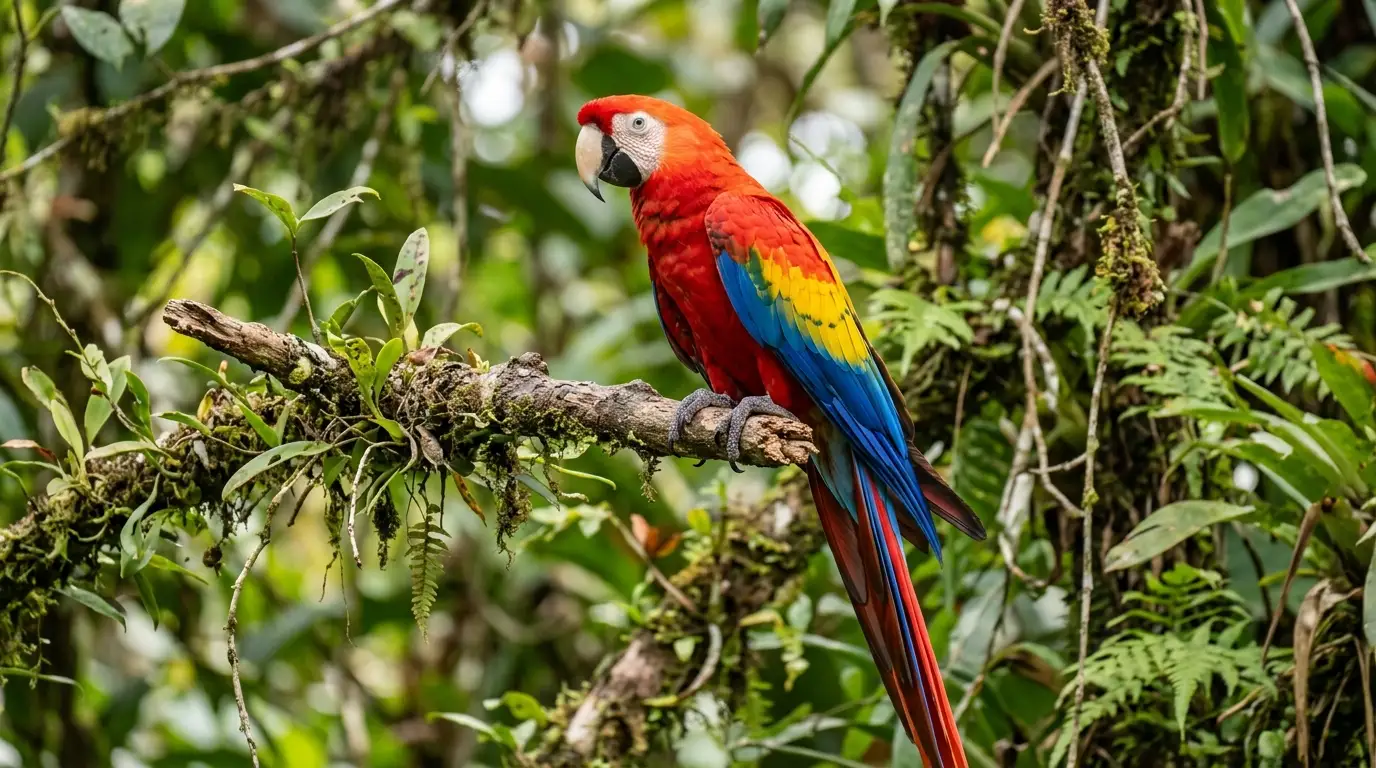
The Ara macao communicates through strident vocalizations. Their powerful squawks penetrate the dense vegetation, clearly distinguishing themselves from the melodic calls of typical songbirds. Their majestic flights are so cinematic that they often feel like a scene straight out of a beautiful nature documentary or an animated birds in peru movie.
Macaw Feeding Habits
They are seed predators and consumers of hard nuts. A vital behavior observed in these Amazonian birds is geophagy; they visit clay licks on riverbanks to ingest minerals that neutralize the chemical toxins of the plants they consume.
Lifespan in the Amazon
They are characterized by remarkable longevity, exceeding 40 years in the wild. It is common to see them flying in pairs, as they are strictly monogamous animals.
Keel-billed Toucan
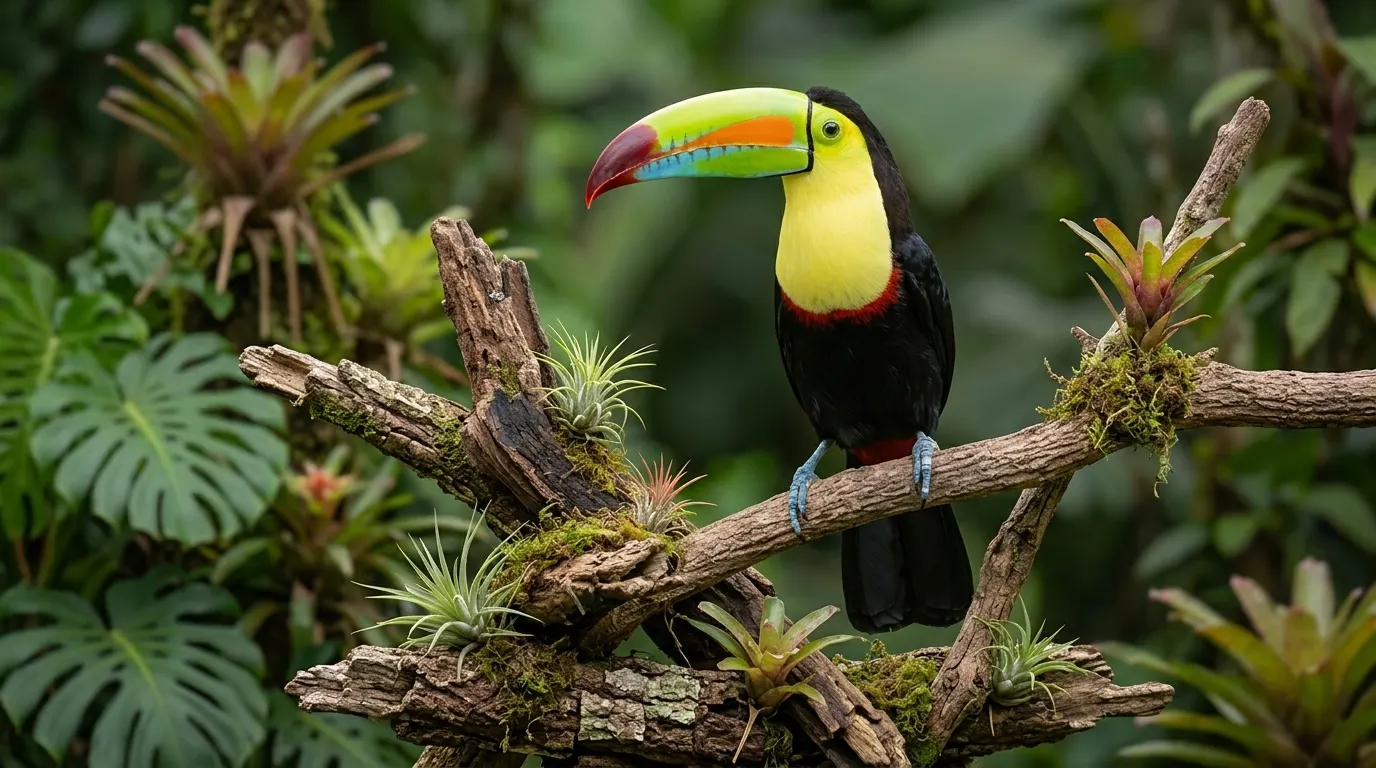
The Ramphastos sulfuratus possesses a hyper-developed beak that functions as a vascular thermoregulation network. It is one of the most prominent exotic birds in the region, representing an exceptional anatomical adaptation.
Toucan Feeding Habits
Although their base diet is frugivorous, they exhibit opportunistic omnivorous behavior. They ingest arthropods, small reptiles, and even raid the nests of other local birds to obtain a protein supplement.
Exotic Ground and Brightly Colored Birds
The stratification of the forest offers niches on the forest floor or understory. Here live anatomically modified species adapted for terrestrial life. These running birds represent excellent biological models for teaching environmental education.
Pale-winged Trumpeter
The Psophia leucoptera is a highly gregarious bird. When creating educational material, it is often emphasized how historical Amazonian communities domesticated them, demonstrating a close human coexistence with local wildlife.

Feeding Habits
They forage in the leaf litter looking for insects and fallen fruits. They share a symbiotic relationship with primates, feeding on the scraps that monkeys drop from above.
Hoatzin: The Prehistoric Bird
The Opisthocomus hoazin is a living fossil. With its bizarre appearance and unique genetics, it looks like a mythical creature taken directly from the pages of a classic birds of the jungle book. It represents a genetic lineage with no close relatives among current bird species.
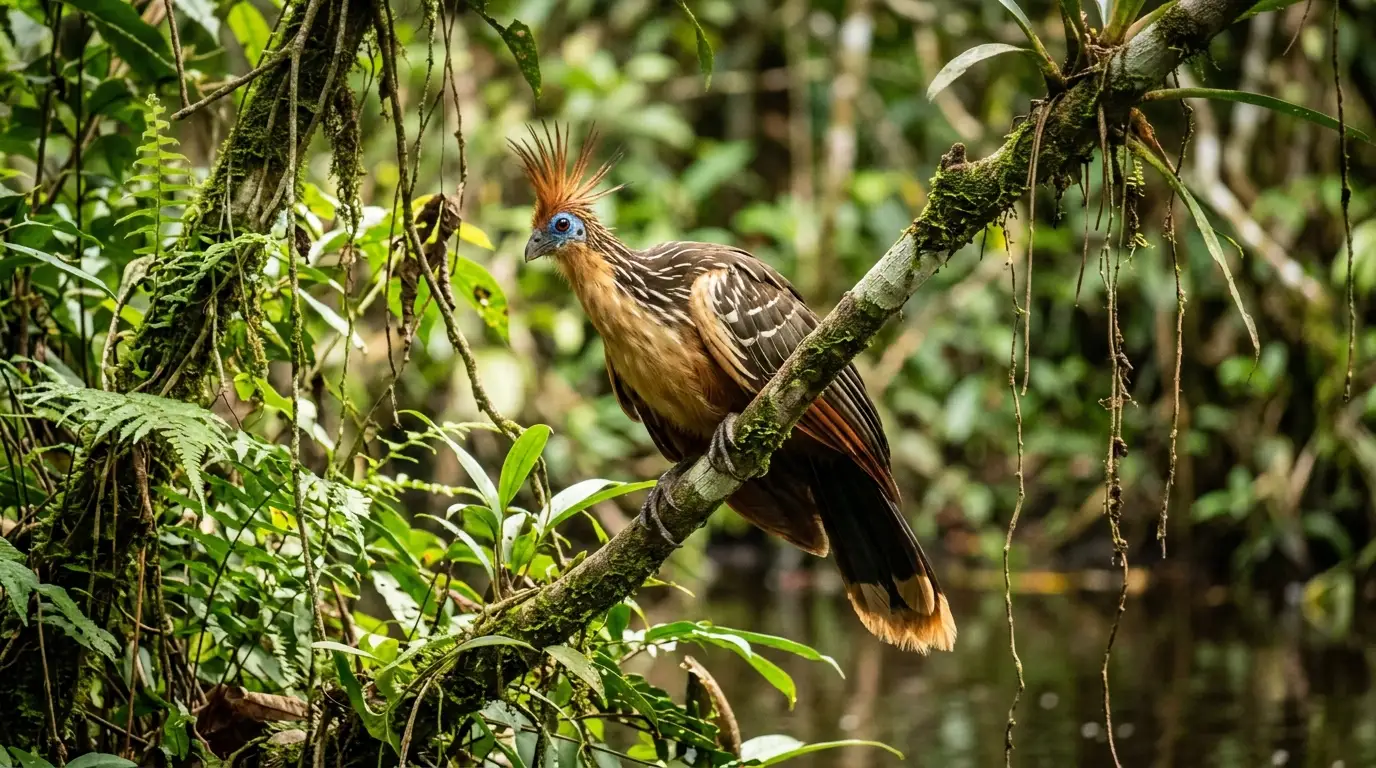
Feeding Habits
It is the only ruminant bird in the world. It uses an enlarged muscular crop to ferment leaves through bacterial action.
Paradise Tanager
The Tangara chilensis presents a vibrant, multicolored plumage. To see this bird flying is to observe iridescent patterns of green, blue, and scarlet. They usually move in mixed flocks agilely through the canopy.
Amazonian Motmot
The Momotus momota is unmistakable. This species leads the list of birds with plumage modifications, highlighting the pendulum-like movement of its tail feathers. They are ambush hunters, catching large centipedes and small lizards from static perches.
Birds of Prey and Scavengers
The top layer of the trophic pyramid maintains the ecosystem's balance. Carnivorous and scavenging birds regulate mammal and reptile populations, dominating the canopy.
Harpy Eagle: The Amazon's Apex Hunter
The Harpia harpyja is the most robust aerial predator in the Americas. While the Andean Condor takes the title of the biggest bird in peru overall, the Harpy Eagle is the undisputed giant of the Amazon jungle canopy. It is a bioindicator of pristine forests.
Feeding Habits
It captures arboreal prey such as two-toed sloths and howler monkeys. Its tarsi and talons exert lethal pressure, placing it at the absolute top of the food chain.
Black Vulture
The Coragyps atratus fulfills an irreplaceable sanitary function. By processing carcasses, they prevent the spread of pathogens in the forest, providing a crucial ecosystem service.
Endangered Birds of the Peruvian Jungle
Habitat loss from deforestation and illegal mining drastically reduces wild populations. Endangered species require immediate scientific intervention.
Razor-billed Curassow
A large cracid suffering from heavy hunting pressure. It is a terrestrial frugivore critical for tree regeneration, making its protection essential for the natural reforestation cycle.
Marvelous Spatuletail Hummingbird
The Loddigesia mirabilis is endemic to a microhabitat in northern Peru. Its taxonomic rarity makes it the jewel of the high jungle, but agricultural fires keep it at the most critical level of extinction danger.